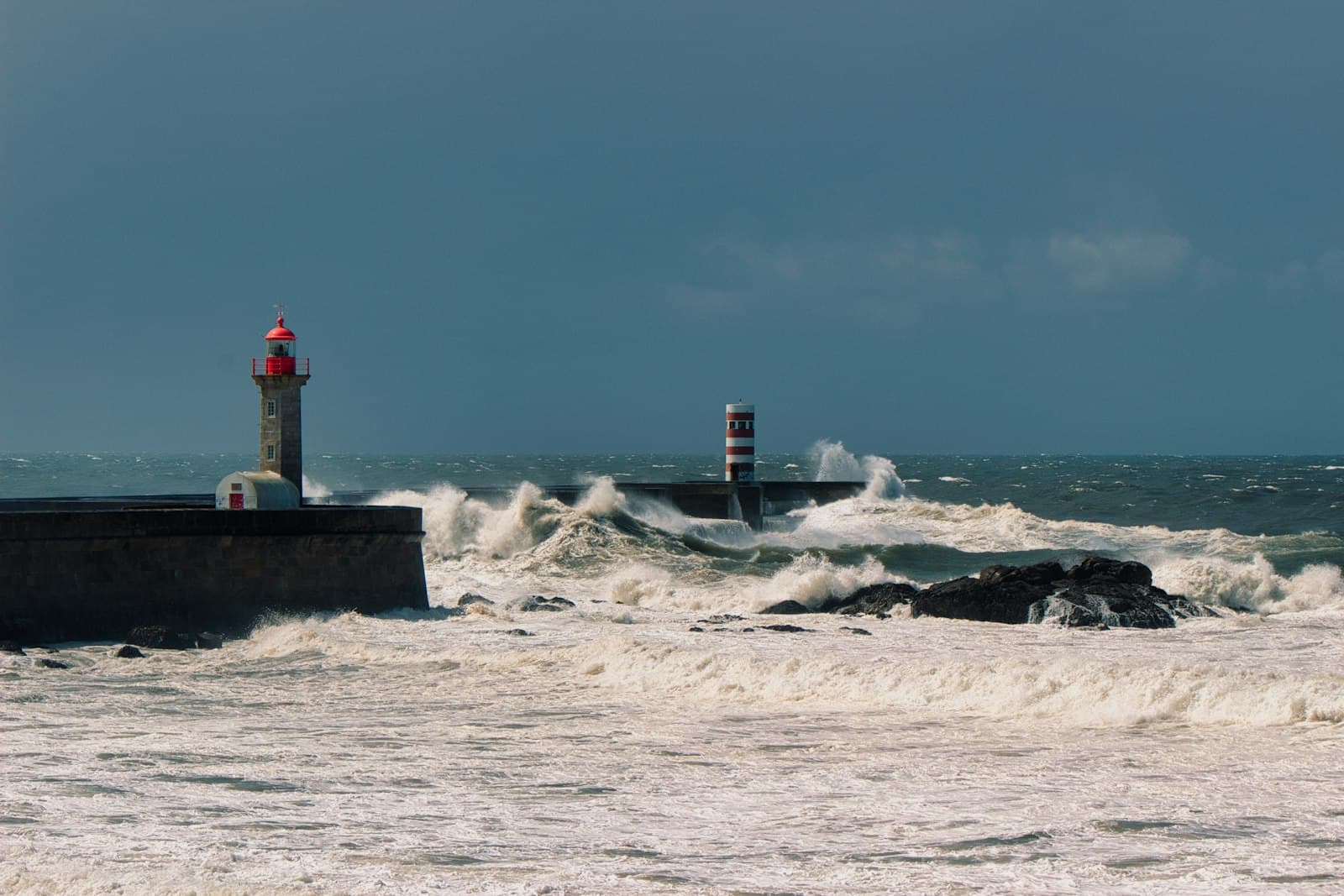
Restoration lead generation in Halifax fails for one reason: operators market to a single market that does not exist. There is no generic Halifax restoration customer. There are four loss streams, each with its own trigger, its own search phrasing, its own payer and its own season, and the franchise sites that own the Halifax results compete hard on one of them.
This is the Halifax version, built from Halifax Water's own regulations, the municipality's flood history record, Nova Scotia Environment's Contaminated Sites fact sheet, Statistics Canada heating data, the Insurance Bureau of Canada's post-2023 reporting and r/halifax threads where Haligonians describe exactly what happened after the water came in.
Why is restoration lead generation different in Halifax than the rest of Canada?
Because Halifax has a fourth loss stream almost nowhere else in the country has at scale: home heating oil.
Statistics Canada's 2023 Survey of Households and the Environment, summarised by the Nova Scotia Department of Finance in October 2025, found fuel oil made up 28 per cent of residential heating energy in Nova Scotia, just behind electricity at 29 per cent. Across Canada, fuel oil is 2 per cent. Prince Edward Island is the only province close, also at 28 per cent. Boilers with water or steam radiators, the classic oil-fired setup, run 16 per cent of Nova Scotia residences against 7 per cent nationally.
Fourteen times the national rate of oil heat means fourteen times the tank population, and a tank population that is aging out under insurer pressure rather than under a regulator's schedule. That is a restoration revenue line that a Halifax operator can own and a national franchise playbook will never emphasise, because it does not exist in the markets those playbooks were written for.
Everything else follows the general logic of getting more restoration leads, but the mix is Halifax-specific.
What are the four loss streams that create restoration leads in Halifax?
Four, and they do not share a season, a payer or a search term. Treating them as one page is why most Halifax restoration sites convert badly.
| Stream | Trigger | Peak timing | Who pays | Typical first search |
|---|---|---|---|---|
| Sewer backup and pluvial flood | Blocked lateral, surcharged main, intense rainfall, snowmelt | Spring melt, summer convective storms | Homeowner's insurer, sewer backup endorsement | "basement flooded Halifax who to call" |
| Post-tropical storm wind and surge | Hurricane season landfall, downed trees, roof breach, coastal surge | Late August to early October | Homeowner's insurer, wind is a named peril | "storm damage repair Halifax emergency" |
| Wildland interface fire and smoke | Spring drought, interface fires in Hammonds Plains, Tantallon, Shelburne | Late May to June | Homeowner's insurer, near-total losses | "smoke damage cleanup Halifax" |
| Home heating oil release | Tank failure, line failure, overfill, decommissioning discovery | Year round, spikes on delivery days and thaws | Insurer if the endorsement exists, otherwise the owner | "oil tank leak basement what do I do Nova Scotia" |
Notice the last column. Only the first two are contested by the franchises. The third is episodic and enormous. The fourth is a panicked, high-value, legally complex search that almost nobody in Halifax has built a page for.
How do you get sewer backup and basement flood leads in Halifax?
By owning the ninety minutes between the homeowner calling Halifax Water and the homeowner calling anyone else.
Halifax Water's own basement flooding page tells residents to call the 24 hour Customer Care Centre at 902-420-9287, then, and this is the line worth reading twice, advises them to "consider getting help with the cleanup from professionals" and to "look up Water Damage Restoration in the Yellow Pages or on the Internet." The utility hands the homeowner an unbranded search and walks away. Whoever is the best answer to that search wins the job.
The economics of the follow-up are also worth knowing before you write a word of copy. Halifax Water owns the sewer main under the street to the property line. The homeowner owns the lateral running from the property line to the house. If a video inspection and a written report from a certified plumber establish the obstruction is on municipal property or easement, Halifax Water reimburses the plumbing and video cost to a maximum of $700 including HST under Section 62 of the Halifax Water Regulations. Seven hundred dollars is a diagnostic reimbursement. It is not a damage settlement.
Haligonians learn this the hard way. In a February 2026 r/halifax thread titled "Basement flood caused by Halifax Water," a homeowner reported that Halifax Water had verified the blocked street drains were their fault and had opened a claim. A Halifax plumber replied bluntly:
"I can't see HFX Water paying for this mess. They may have said it came from their pipes, but that does not carry fault. Unfortunately, the first question will be 'is there a backwater valve? Yes? Then it failed. No? You should have had one'."
Another commenter said Halifax Water had given them a claim number after clearing a blockage a year earlier and never followed up. The practical restoration marketing move is a page that explains the $700 cap, the lateral boundary and the backwater valve question honestly, then offers same-day mitigation. Explaining the thing the utility will not explain is how you get the call.
By the numbers
Over 250 mm of rain fell on Halifax in 24 hours on July 21, 2023, the most intense rainfall recorded since Hurricane Beth in 1971. Halifax and Halifax Water logged more than 1,800 work orders for washed-out bridges, roads, sidewalks and sinkholes. Source: Halifax Regional Municipality, Recent memories of floods.
How do you get storm and wind damage restoration leads in Halifax?
By being visible before the storm, not after, because the search volume arrives in a twelve hour window and then collapses.
Halifax's own record makes the pattern concrete. Hurricane Juan made landfall on September 20, 2003 with winds to 230 km/h and a storm surge 2.9 m above average, the highest ever recorded there. Post-tropical storm Dorian on September 7 and 8, 2019 brought maximum recorded winds of 145 km/h and up to 130 mm of rain, and knocked out power to over 400,000 residents. Fiona, on September 24, 2022, dropped up to 191 mm at the Osborne Head station near Cow Bay.
Three things follow for lead generation. First, your storm page should exist and be indexed in July, not published the morning after landfall. Second, the offer that converts during an outage is not a form, it is a phone number that a human answers, which is exactly the argument for handling after-hours calls properly. Third, Google Business Profile is doing most of the work in that window, and if you serve the whole municipality from a yard rather than a storefront you need to understand how a service area business profile behaves.
How do you get wildfire and smoke damage restoration leads in Halifax?
By treating interface fire as a Halifax peril rather than a western one, and by building the smoke and contents pages that only exist in Alberta right now.
The Tantallon wildfire burned from May 28 to June 4, 2023 inside the Halifax Regional Municipality. The Insurance Bureau of Canada, citing CatIQ, put insured damage at over $165 million, with nearly 90 per cent of claims by count being personal property claims and at least 200 properties destroyed or damaged, including 151 homes. More than 16,000 people evacuated. Across the province, 2023 saw roughly 220 wildfires burn about 25,000 hectares, and Public Safety Canada issued an interim DFAA payment of $15,990,330 for the event.
The lead volume here is not in the 151 total losses, which go to program contractors and rebuild GCs immediately. It is in the ring around them: hundreds of homes with smoke infiltration, soot on contents, HVAC contamination and an insurer willing to fund a cleaning scope. Nearly 90 per cent personal property claims is the tell. Contents restoration, ozone and hydroxyl treatment, textile and document recovery, and duct cleaning after a smoke event are searched by people who were never evacuated and are not on any adjuster's priority list.
Tip
Write the smoke page for the homeowner two kilometres from the fire line, not the one who lost the house. The second one is already assigned. The first one is searching alone.
How do you get heating oil spill leads in Halifax? The stream nobody markets
This is the highest-value, least-contested restoration lead in Halifax, and it is legally structured in a way that hands the work to whoever explains it first.
Nova Scotia Environment's fact sheet for homeowners sets out the rules. Under the Environment Act and the Environmental Emergency Regulations, a furnace oil spill equal to or over 22 imperial gallons, which is 100 litres, must be reported, and smaller spills must be reported if they may potentially cause an adverse effect. Outside 8:30am to 4:30pm, on weekends and on holidays, the reporting line is 1-800-565-1633. If the spill entered a municipal sewer through a floor drain, the homeowner must also call the municipal works department.
Then comes the part that creates the referral relationship. Where a property is contaminated, the person responsible must hire an environmental site professional, and the Contaminated Sites Regulations define that person as a registered engineer or geoscientist with a minimum level of experience. The department does not do the cleanup. It orders it. A homeowner standing in a basement that smells of furnace oil at 9pm does not know any of this, and the restoration company that has a named site professional on speed dial is the one that turns a frightening phone call into a managed project.
The money is serious. Canadian Underwriter, in an October 2024 piece by Harry F. Steinmetz of Lerners LLP, puts residential oil leak remediation at $10,000 to $350,000 or more depending on the volume, the plume spread and whether the oil can migrate off site onto a neighbour. The same article reports that claims for leaks related to residential oil tanks have risen more than 50 per cent over the past decade, and cites the IBC figure that one litre of leaked oil can contaminate up to one million litres of drinking water.
The upstream demand is already visible on r/halifax, in a form no other Canadian city produces. One homeowner wrote that their insurer would not renew unless the tank was replaced, "But it's only from 2009 and fiberglass. I thought the whole reason for paying extra was they last longer?" A north end renter reported that "as soon as they hear 'single walled oil tank' they refuse to insure me." Another described a 2002 tank on a 1995 boiler and noted that their insurance "doesn't cover any damage related to the oil system."
Read that last one again. A meaningful share of Halifax oil-heated homes carry no fuel oil release coverage at all. When those tanks fail, the homeowner is personally liable and shopping on price and speed, not on an adjuster's vendor list. That is a private-pay lead in a category where everyone else is chasing insurer assignments, and it is the cleanest escape from competing on price for restoration jobs.
Most Halifax restoration sites are one water damage page and a phone number. Pavado builds the conversion page and the qualifying form for each loss stream separately, then runs the outreach and paid campaigns that feed them, so an oil release lead and a sewer backup lead never land in the same generic inbox.
Why do Halifax homeowners say they cannot get a restoration company to call back?
Because the industry's constraint in this market is capacity, and every unanswered call is a competitor's lead.
In May 2025 a Halifax homeowner posted in r/halifax looking for help with a water leak, writing: "I've contacted a number of restoration companies but am not getting any responses, so would love some help here." The top reply was not kinder: "Restoration companies in this province are a joke. I have seen pretty well everyone of them through my building for different insurance claims etc. They all hire inexperienced staff that have 0 clues what they are doing 85% of the time."
That is not one grumpy commenter. The Insurance Bureau of Canada's own one-year report on the 2023 wildfires and flooding, released in July 2024, identified a scarcity of skilled labour, a shortage of building materials and a lack of adjuster capacity as significant hurdles in the claims process. Total insured losses for the two events reached $490 million, with 88 per cent of Tantallon claims and 90 per cent of July 2023 flood claims resolved a year later, meaning roughly one in ten was still open twelve months on.
For a Halifax operator this is the most valuable competitive fact in the market. In a category where the incumbent brands are strong, the differentiators that actually move a homeowner are boring and provable:
- A human answers the phone at 2am, and you can name the person.
- A truck is on site within a stated number of hours, and you publish the number.
- You handle contents removal and storage, not just drying.
- You do the rebuild, not only the mitigation, so the homeowner does not have to hire twice.
- You explain who pays before you ask them to sign anything.
Item three matters more than most operators think. In that same February 2026 flood thread, the homeowner, a single working parent, wrote: "if the restoration company can organize removal of the furniture, remediation and all the repairs, I'm quite happy for them to do it. I work full time and am a single parent. I have enough on my plate." The full-service offer wins over the cheaper split job, in that homeowner's own words.
What do Halifax losses actually cost, and why does that change your offer?
Because the numbers Haligonians quote each other are large enough that trust, not price, is the deciding factor.
Two accounts from the same r/halifax thread give the shape. One homeowner flooded in the July 2023 storm described a $75,000 settlement broken into roughly $15,000 for remediation and a storage unit rental, $30,000 for the renovation and $30,000 for durable goods, and credited a full replacement cost policy: "Insurance didn't care what the items were worth used; they covered what it cost to replace them today." Another described a parent's sewer backup that "started at 20k but that just covered the removal and storage of items" and finished near $100,000 with the basement completely redone.
A homeowner staring at a five-figure decision does not choose on a form fill. They choose on whether the company looks like it will still be there in month four. That is an argument for publishing job documentation, named crew, and a written scope process, and it is why restoration leads fail to convert far more often on trust than on speed.
Should you buy restoration leads in Halifax or generate your own?
Generate your own, and use purchased leads only to smooth the trough between events.
Halifax has an unusual demand curve: long flat baselines punctuated by municipality-wide catastrophes. On a normal Tuesday in February the market is small enough that a shared lead sold to four companies is close to worthless, which is the whole argument in exclusive versus shared restoration leads. On September 25, 2022 or July 22, 2023, nobody needs to buy a lead at all, because every phone in the province is ringing and the only question is who picks up.
That shape rewards owned assets over rented ones. Four indexed loss-stream pages, a Google Business Profile with real job photos from Halifax addresses, and a phone process that survives a surge will outperform a lead subscription over a five-year window in this market, without the per-lead cost that shows up in what restoration leads actually cost. Program and preferred vendor work is worth having as ballast, and the mechanics of getting insurance restoration work are worth learning, but a book of business where an insurer sets your rate is a book where your margin is set by someone else.
If you want to see how the same four-stream logic plays out in a very different Canadian city, the London, Ontario version is built on sewer surcharge and a municipal grant program rather than on oil tanks and hurricanes.
A 60-day plan for a Halifax restoration company
Ordered by how quickly each item produces a phone call.
- Week 1. Publish four separate service pages, one per loss stream, each answering who pays in the first two sentences. Not one water damage page with four bullet points.
- Week 1. Put the $700 Halifax Water reimbursement cap, the lateral boundary and the backwater valve question on the sewer backup page in plain language. It is the single most searched confusion in the category and nobody local explains it.
- Week 2. Build the oil release page: the 100 litre reportable quantity, the 1-800-565-1633 after-hours line, the site professional requirement, and what happens when there is no fuel oil release endorsement.
- Week 2. Name a site professional, a registered engineer or geoscientist, that you can hand an oil release to the same night. That relationship is the offer.
- Week 3. Fix answering. Publish your response time. Have a 2am path, a callback guarantee and a text fallback, because the top complaint about the category in Halifax is silence.
- Week 4. Load your Google Business Profile with dated job photos from real Halifax and Dartmouth addresses across all four streams, not stock drying equipment.
- Weeks 5 to 6. Build the smoke and contents pages before wildfire season, not during it.
- Weeks 7 to 8. Publish the storm page and the pre-storm checklist by mid-August so it is indexed before hurricane season peaks.
Every item on that list is an asset you keep. None of it depends on an insurer, a franchisor or a lead vendor deciding you are still worth sending work to. Pavado's lead generation service exists to build exactly that: the page, the qualifying form that arrives with the answers already attached, and the campaigns that feed it.