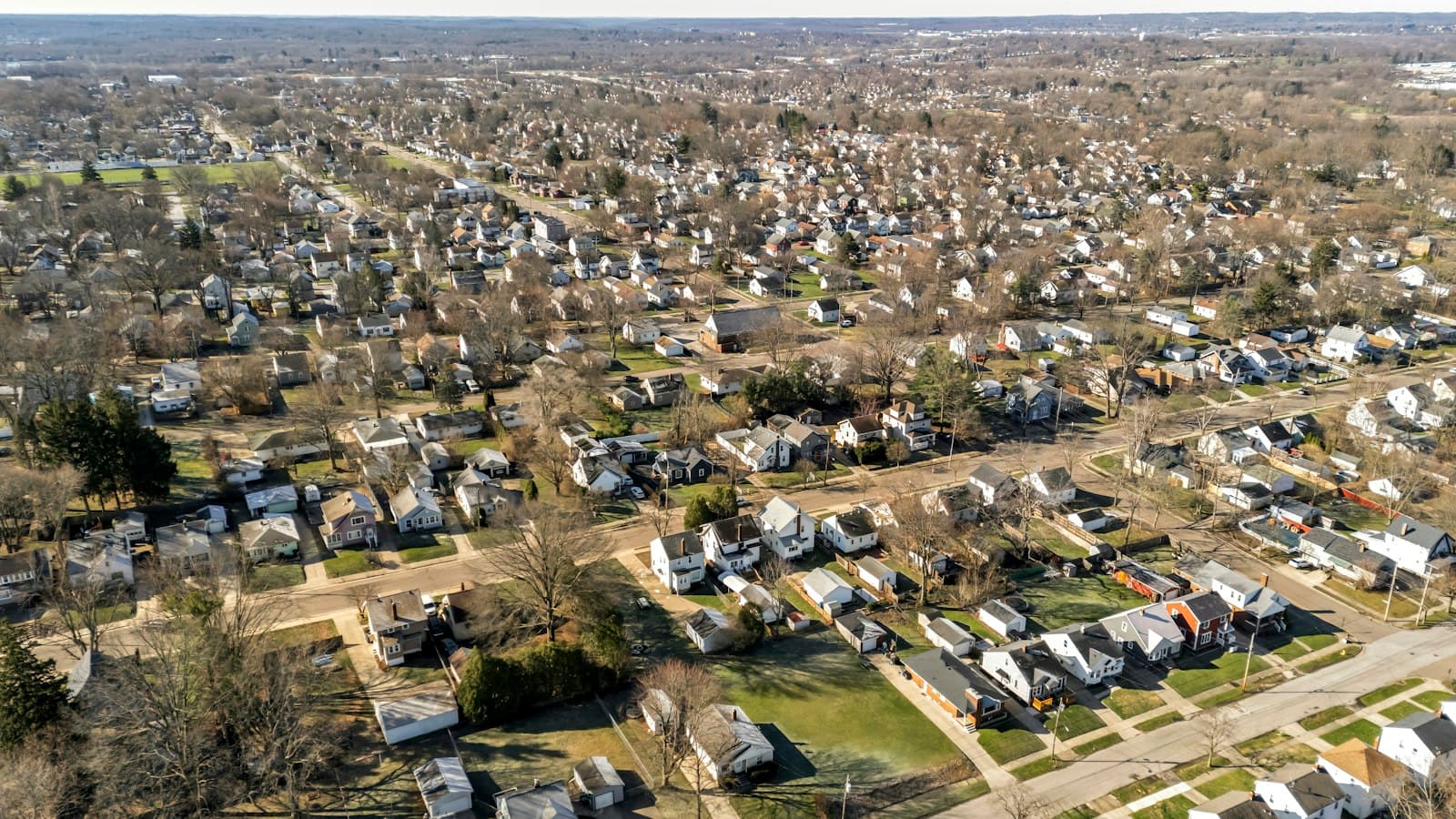
Restoration lead generation in Houston is decided by three boundary lines, and none of them appear in a national restoration marketing playbook. The 25 contiguous square foot line, which splits every licensed mold job in Texas across two separate companies. State Highway 146, which splits Harris County into a windstorm market and a non-windstorm market. And the floodplain line, which FEMA is redrawing across the county right now.
Speed matters everywhere. What is different here is that Texas regulates the paperwork, the licences and, unusually, the words on your website. This piece is built from the Texas Department of Licensing and Regulation's mold program pages, the Texas Department of Insurance's contractor advertising guidance, the Texas Insurance Code itself, TWIA and TDI windstorm eligibility documents, the Harris County Flood Control District's own Harvey report and r/houston threads where Houstonians describe what actually happened after the water came in.
Why is restoration lead generation different in Houston than the rest of the US?
Because Texas turns a single water loss into a regulated, multi-party project, and Houston produces more of those losses than anywhere else in the state.
In most US markets a restoration company dries the house, finds mold, removes the mold, writes its own clearance and bills the carrier. In Texas that sequence is illegal for licensed operators. TDLR's own FAQ is blunt: a person may hold both a mold assessment licence and a mold remediation licence, "However, you are not allowed to conduct both mold assessment and mold remediation activities on the same project," with a narrow carve-out for school district employees working on their own district's project.
Curren Environmental's state-by-state roundup counts 15 states that have or had mold licensing or guidance of some kind, and notes Texas runs seven separate licences for companies and individuals dealing with mold, excluding the laboratories. Maine requires only a signed conflict-of-interest disclosure. Oklahoma allows the same firm to do both if the total is $200 or less. Texas simply forbids it.
That single rule changes the shape of a Houston restoration business, and therefore the shape of its marketing. You cannot sell a homeowner an end-to-end mold job. You can only sell half of one, plus the relationship that produces the other half. The general playbook in how to get more restoration leads still applies. The structure of the offer does not.
What can a Houston restoration website legally say about insurance claims?
Less than most of them currently say, and this is the fastest compliance win available in the market.
The Texas Department of Insurance publishes a consumer and contractor page titled "Roofing and insurance: Know the law." Its opening line: "Texas doesn't allow a roofer or contractor to act as a public insurance adjuster on insurance claims if they're also doing the work. You can't advertise that you would do so, either."
TDI then lists examples of improper language and conduct. Read these against the copy on a typical restoration site.
| What a lot of restoration sites say | TDI's position | The compliant version |
|---|---|---|
| "We negotiate your settlement with the insurer" | Listed as improper: offering to negotiate claim settlements or file a claim for the policyholder | "We document the loss to IICRC standards and give you and your adjuster the same file" |
| "We recover every dime you are owed" | Quoted verbatim by TDI as improper language | "We scope and price the work in Xactimate, the platform carriers use" |
| "We help you avoid incorrect settlement pricing" | Listed as improper advertising | "We provide moisture readings, photos and daily drying logs" |
| "We represent you to your insurance company" | Improper: telling others, including insurers, that you represent the policyholder | "We work for you, and we do not speak for you on coverage" |
| "No deductible" or "we cover your deductible" | Illegal to waive, rebate or absorb a deductible | State plainly that the deductible is the homeowner's to pay |
The legal furniture behind that table is specific. Insurance Code 4102.163 prohibits acting as a public adjuster or advertising to adjust claims if you provide or may provide contracting services on the property. The prohibition runs to the advertising itself in any medium, which is the part most operators miss: the Supreme Court of Texas decided Stonewater on the contractor's own website copy. Insurance Code Chapter 707 requires a property insurance policyholder to pay the deductible and authorises insurers to request proof of payment. Business and Commerce Code 27.02 prohibits waiving or rebating a deductible and requires a notice on contracts of $1,000 or more involving insurance settlements. TDI directs violations to the Texas Attorney General at 800-621-0508.
Watch out
If a marketing agency writes your Houston restoration site from a national template, there is a good chance it ships at least two phrases from TDI's improper-language list. In Texas that is not a style problem. Your website is the advertisement.
Why does every Houston mold job need two separate companies?
Because the 25 contiguous square foot threshold and the assessor separation rule together split the work, and Houston's climate pushes ordinary water losses over that threshold routinely.
TDLR's notification page sets the trigger precisely. A Mold Remediation Notification is required when mold contamination affects a total surface area of 25 contiguous square feet or more and remediation will be conducted. There is a $25 fee. Start dates moved earlier need at least five calendar days of notice, unless an emergency notification has been filed. An emergency exists where a delay in remediation would increase contamination due to water damage, the licensee decides whether it is an emergency rather than the department, and the notification is then due no later than the following working day.
There is an exemption for smaller residential buildings, so a single-family homeowner is not forced to hire licensees. But TDLR closes the loop that most operators get wrong: "A licensed MRC performing a small mold remediation project (less than 25 contiguous square feet) is not exempt from the law and rules." Once a licensed remediation contractor is hired, the contractor must work from a work plan that follows a protocol developed by a licensed Mold Assessment Consultant, regardless of size. Only the notification requirement falls away.
Put those together and the Houston mold lead has a fixed shape:
- The homeowner searches after a leak, a slab failure, an AC condensate line or a storm.
- A licensed Mold Assessment Consultant inspects and writes the protocol.
- A separate licensed Mold Remediation Contractor writes a work plan following that protocol and does the work.
- The consultant, who cannot be the remediator, performs the post-remediation assessment and clearance.
- Both must hand the client and the property owner a Consumer Mold Information Sheet before any mold-related activity begins.
Whoever the Houston assessors trust gets step three by default, for years, without spending on ads. That referral relationship is a lead source with a compliance moat around it, and it is the Houston analogue of the site professional relationship described in the Halifax version of this article.
What is the mold certificate worth to a Houston homeowner?
It is worth their insurability, and it is the strongest uncontested offer in this market.
Texas Insurance Code 544.303 says an insurer may not make an underwriting decision regarding a residential property insurance policy based on previous mold damage or a claim for mold damage where the property had mold damage, remediation has been performed, and the property was either remediated as evidenced by a certificate of mold remediation issued to the property owner under Occupations Code 1958.154 establishing with reasonable certainty that the underlying cause has been remediated, or inspected by an independent assessor or adjustor who determined the property does not contain evidence of mold damage. An insurer that violates the subchapter is subject to sanctions under Insurance Code Chapters 82, 83 and 84.
The certificate is TDI form MDR-1, the Certificate of Mold Damage Remediation. TDLR states plainly that only a licensed remediator is authorised to give one, and that a person who uses unlicensed workers cannot obtain one because an unlicensed person is not authorised to give a CMDR.
That is the entire pitch, and it is legal to make because it is a statement about the homeowner's paperwork rather than a promise about their claim. Cheap unlicensed cleanup costs the homeowner the document that protects their policy at renewal. Nobody in Houston is putting that on a landing page.
The same logic runs through water losses. Insurance Code 544.353(c) says an insurer may not use a prior appliance-related claim as a basis for setting a rate, or for deciding whether to issue, renew or cancel a policy, if the person properly remediated it and had the remediation inspected and certified by a person or entity knowledgeable and experienced in the remediation of water damage, subject to an exception in subsection (e). Section 544.352 defines appliance broadly: air conditioning units, heating units, refrigerators, dishwashers, icemakers, clothes washers, water heaters and disposals, including hoses directly attached.
Those are the exact failures that generate most Houston water calls. A water heater in a second-floor closet. A supply hose behind a washer. An AC condensate pan in an attic in August. In every one of them, a documented, certified remediation is a statutory shield the homeowner can use at renewal, and you are the only person who can hand it to them.
By the numbers
Section 544.301 excludes surplus lines insurers, the Texas Windstorm Insurance Association under Chapter 2210, and the FAIR Plan under Chapter 2211 from the definition of insurer for these protections. So the certificate argument is strongest for homeowners on standard admitted carriers, and weakest for the coastal edge of Harris County. Source: Texas Insurance Code Chapter 544.
Most Houston restoration sites are one water damage page, a phone number and at least one sentence TDI lists as improper. Pavado builds the compliant conversion page for each loss type, the qualifying form that arrives with the licence questions already answered, and the campaigns that feed both.
Why does State Highway 146 split the Houston restoration market?
Because it is the eastern boundary of the only part of Harris County where windstorm coverage is a separate policy, and where a repair can require a state certificate.
TWIA's own overview states that the designated catastrophe area covers all 14 first tier coastal counties plus parts of Harris County east of Highway 146, and names them: when the property is inside the city limits and east of Highway 146, La Porte, Morgan's Point, Pasadena, Seabrook and Shore Acres are included. TDI's Harris County windstorm page lists the same five communities in the Inland I zone, built to the 2006 IRC or IBC with Texas Revisions at a 120 mph three-second gust design wind speed for construction on or after June 1, 2008.
Two consequences follow, and both are lead generation facts rather than trivia.
First, TWIA covers wind and hail only. No other perils. A Seabrook homeowner with a post-storm loss may be dealing with two carriers and two adjusters for one event, and the question of which policy pays for which part of the damage is the thing they are searching at 6am. A page that explains that split honestly, without offering to adjust anything, is the highest-intent asset you can own inside those five city limits.
Second, TWIA requires a Certificate of Compliance, the WPI-8 family, on all structures constructed, altered, remodeled, enlarged, repaired, or to which additions have been made on or after January 1, 1988. TDI administers the Windstorm Inspections Program and issues the WPI-8 and WPI-8-E. A restoration rebuild that touches the building envelope inside those city limits can therefore break a homeowner's TWIA eligibility if nobody arranges the inspection.
A restoration company that can say, in writing, that it works with TDI-appointed engineers and delivers a WPI-8 at the end of an envelope repair is selling something no generic Houston operator west of the highway can match. It is also a clean example of the argument in how to stop competing on price for restoration jobs: you are not cheaper, you are the only one who leaves the property insurable.
How do you market to the Houston homeowners who flood outside the floodplain?
By naming the number, because it describes the majority of the market and because it identifies a customer who is paying out of pocket.
The Harris County Flood Control District's final Immediate Flood Report on Hurricane Harvey recorded one trillion gallons of water falling across the county, nearly 70 per cent of the county's entire annual rainfall inside a four-day window, more than 60,000 residents rescued using government resources, and more than 154,000 homes flooded. Nearly 70 per cent of those homes were outside the 100-year floodplain, and over half of them had no flood insurance. The district also estimated that earlier flood control projects, buyouts included, potentially spared around 24,000 homes.
Read the last two sentences as a market description rather than a disaster statistic. The typical Harris County flood victim is not in a mapped high-risk zone, did not have an NFIP policy, and is spending their own money. That is a private-pay customer choosing on trust and availability rather than on an adjuster's vendor list, which is exactly the demand profile that rewards owned assets over rented ones.
The map itself is now moving. In a February 2026 statement, HCFCD said FEMA had provided draft floodplain mapping information to the 34 floodplain administrators in Harris County through the MAAPnext effort, and that the maps reflect changing conditions including "a more than 30% increase in rainfall rates, updated topography and advanced modeling." The district was careful to add that these are draft maps for technical review, "not final, not regulatory, and not part of FEMA's formal public appeal and comment process," and that nothing changes right now for flood insurance requirements or development regulations.
For a restoration marketer that is a dated, county-wide, high-anxiety search event with a long runway. Thousands of Harris County households are going to learn that their risk classification is being reassessed, and they will search before any of it becomes regulatory. A calm, accurate explainer page published now, linked from your service pages, will be indexed and aged by the time the formal comment process starts. Building that as one honest county-level resource rather than a hundred near-identical suburb pages is the point of why service area pages usually backfire.
What do Houston homeowners actually say when they need a restoration company?
They say they expect to be overcharged, and they ask about certification before they ask about price.
In a January 2026 r/houston thread asking for water damage restoration company recommendations after a sink overflow, the top-scoring reply was not a recommendation at all: "Contact your insurance company before you get nickel and dimed." That is the default posture you are marketing into.
The most useful post in the subreddit is from July 2024, written by a Houstonian who says they are IICRC-certified in water mitigation and structural drying and spent five years at a local Houston firm working "the greatest hits of big events (Memorial Day floods, Tax Day floods, Harvey, etc)." Their advice reads like a specification for what a good Houston restoration page should contain:
"Mitigation contractors are generally super busy after events like this (after Harvey I worked 41 12-hour days in a row) so if you do everything above and it's gonna be a while before someone gets to you, you can go to Harbor Freight or somewhere similar and get a moisture meter... Under 12% is dry, 17% to 20% is borderline and 21%+ is conditions for mold and rot."
They also tell homeowners to keep a timesheet of their own mitigation hours for reimbursement, to document everything before cleaning, and to verify that a firm is an IICRC Certified Firm and can produce its certified firm number. A Houston restoration site that publishes its certified firm number, its TDLR licence numbers and its moisture thresholds is answering the questions this market is already asking itself in public.
The stakes show up in the complaints too. A Houston homeowner posting to r/legaladvice in March 2025 described a contractor who modified their roofline and left it exposed overnight before rain. A third-party remediation firm's moisture meter readings "came back at 999, indicating full saturation," the remediation invoice came to $6,500, and the original contractor's response to that number was "that's ridiculous." The homeowner's own summary of their exposure is the sentence every Houston operator should understand: faulty workmanship "is generally excluded from homeowner's insurance policies, as is mold."
That is the fear. Not the cost of the work, the possibility that nobody will pay for it. Answering that question first is worth more than any speed claim, and it is the reason restoration leads fail to convert far more often on trust than on response time.
Should you buy restoration leads in Houston or generate your own?
Generate your own, and use purchased leads only to fill the trough between events.
Houston's demand curve is long flat baselines punctuated by county-wide catastrophes. On an ordinary Tuesday a shared lead resold to four companies converts badly, which is the whole argument in exclusive versus shared restoration leads. On the third day of a tropical system nobody needs to buy a lead, because every phone in Harris County is ringing and the only question is who picks up and who has crews left.
The structural advantage in this specific market is that the differentiators are documentary, and documents are cheap to publish and impossible to fake:
- Your TDLR licence numbers, by licence type, on the page.
- Your IICRC Certified Firm number.
- The name of the licensed Mold Assessment Consultant you work with, and the explanation that Texas requires it to be someone other than you.
- A plain-language page on the MDR-1 certificate and what Insurance Code 544.303 does with it.
- For the five cities east of Highway 146, a page on TWIA, wind-only coverage and the WPI-8 requirement on repairs.
- Job photos with dated Harris County addresses across water, mold, storm and fire.
None of that costs per lead, none of it expires, and none of it can be bought by a competitor. It compounds in a way that the spend described in what restoration leads actually cost never does. Carrier program work is worth holding as ballast, and the mechanics in getting insurance restoration work are worth learning, but a book where the carrier sets your rate is a book where someone else sets your margin.
A 60-day plan for a Houston restoration company
Ordered by how quickly each item produces a phone call.
- Week 1. Audit every page against TDI's improper-language list. Remove any offer to negotiate, file, represent, recover "every dime," or waive a deductible. This is the only item on this list that carries regulatory risk if you skip it.
- Week 1. Publish licence numbers and your IICRC Certified Firm number in the header or footer of every service page, not buried on an about page.
- Week 2. Build the mold page around the 25 contiguous square foot threshold, the two-licence separation rule, and the notification timeline including the next-working-day emergency notification.
- Week 2. Build the MDR-1 page. Explain Insurance Code 544.303 in plain English and say clearly that unlicensed cleanup forfeits the certificate.
- Week 3. Build the appliance water loss page around 544.353(c) and the statutory appliance list: water heaters, AC units, dishwashers, icemakers, clothes washers, disposals.
- Week 3. Name and publish your Mold Assessment Consultant partner, and ask them to do the same for you. Two firms with reciprocal, compliant referral pages outrank either alone.
- Week 4. If you serve La Porte, Morgan's Point, Pasadena, Seabrook or Shore Acres, build the TWIA and WPI-8 page. Five city limits, almost no competition, very high intent.
- Weeks 5 to 6. Publish the MAAPnext draft map explainer while it is still draft, and keep it updated as FEMA moves to formal comment.
- Weeks 7 to 8. Fix answering and publish your response commitment, then load your Google Business Profile with dated job photos from real Harris County addresses. If you work from a yard rather than a storefront, get the service area business profile set up correctly first, and make sure your after-hours calls actually reach a human during a surge.
Every item there is an asset you keep, and every one of them is true in Houston and false in most of the country. Pavado's lead generation service exists to build exactly that: the compliant page, the qualifying form that arrives with the licence and coverage questions already answered, and the campaigns that feed it.