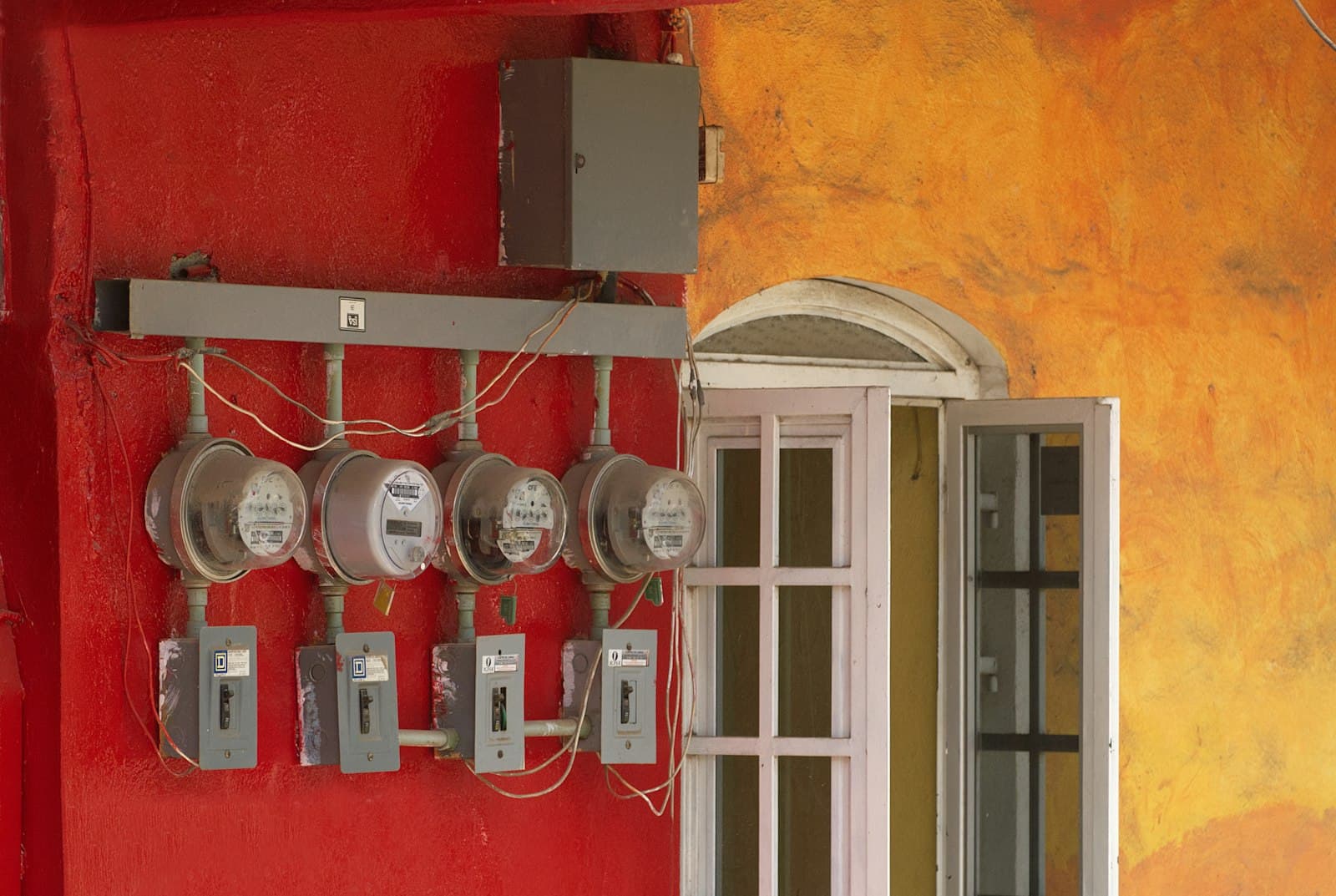
What actually decides an Austin electrical lead?
The utility serving the address decides it, before price, before reviews, before ad spend. Austin is one of the few large Texas markets with no retail electricity choice, because Austin Energy is a community owned enterprise department of the City of Austin, owned by the city since 1895 and serving 575,087 customers over 437 square miles as of FY25. That single fact reorganises the whole funnel. The highest ticket residential electrical work in Austin, panel upgrades tied to EV charging, solar interconnection and backup power, is gated by programs that a city department runs, and those programs stop at a boundary that is not the city limit sign.
Most electrical marketing advice is written for a market where the utility is invisible. In Austin the utility is the buyer's rebate, your inspection sequence, and the reason your quote is right or wrong. The seven levers below are all built on that.
Lever 1: Why does the service address matter more than the city name?
Because half the metro cannot claim the rebates you are advertising. Austin Energy's home solar page states plainly that you must use an Austin Energy Participating Contractor to install your solar system, and its home EV charger rebate requires that you receive electricity from Austin Energy. Outside that territory sits Pedernales Electric Cooperative, described by the cooperative as the nation's largest distribution electric cooperative, owned by more than 300,000 members across 8,100 square miles of Central Texas including parts of Travis, Williamson and Hays counties.
A homeowner in an r/Austin thread on EV charger installs put it bluntly in February 2026: "I'll start by noting that we are with Pedernales. They don't give rebates." They were right about the rebate. PEC's own distributed generation rates page lists a Sustainable Power Credit rather than a rebate, and adds that any unused credits will expire at the end of each calendar year.
| Austin Energy | Pedernales Electric Cooperative | |
|---|---|---|
| Ownership | City of Austin enterprise department, community owned since 1895 | Member owned distribution cooperative |
| Home solar rebate | $4,000 for eligible projects | None published |
| Solar export credit | Value of Solar Rate, 9.91 cents per kWh | Sustainable Power Credit, 7.1921 cents per kWh standard rate |
| Credit expiry | Not stated as annually expiring | Unused credits expire at end of calendar year |
| EV charger rebate | Up to $1,200 Power Partner compatible, up to $900 non compatible | None published |
| Contractor gate | Must be an Austin Energy Participating Contractor | Not applicable |
If your ads, your landing page and your form cannot tell these two homeowners apart, you are paying to generate a quote you will have to walk back. That is a far more common cause of a dead Austin pipeline than bad creative, and it is a specific case of the problem covered in why electrical leads do not convert.
Watch out
Do not solve this with a page per suburb. Cloning one page across Cedar Park, Leander, Dripping Springs and Pflugerville produces near identical pages that Google treats as doorway pages, which is the argument in should I build service area pages. Solve it with one page that asks for the address and branches on the utility.
Lever 2: How do you get Austin Energy to send you leads?
Get on the published contractor lists, because Austin Energy tells customers those lists are the only way to access its money. The participating solar contractors page states that the selection of a participating contractor to perform work is the sole decision of the property owner, recommends customers check references and get at least three quotes, and makes clear that a company not on the list cannot provide Austin Energy incentives. To stay listed, contractors must abide by the Austin Energy Code of Conduct and Ethical Requirements and the Austin Energy Solar Program Contractor Handbook.
The EV side has its own gate. Austin Energy states that a licensed electrician must perform installations of hard wired charging stations and receptacles, and that qualified charging station installers must abide by the same Code of Conduct.
Three things follow for lead generation:
- Listing is distribution, not paperwork. A homeowner who has already decided to claim the $4,000 rebate arrives at that list with intent no ad can match. Getting on it is a one time acquisition cost with an annuity attached.
- Your own site has to survive the comparison. Austin Energy is actively telling that homeowner to get three quotes. Being the only one of the three that explains the sequence wins on something other than price, which is the whole argument in how to stop competing on price for electrical jobs.
- The rebate confirmation letter is a deadline you control. Austin Energy requires that the customer apply for and receive a Solar Rebate Confirmation Letter prior to system installation to be eligible. A shop that drives that letter for the customer owns the timeline, and the job.
Lever 3: Why does the energize step decide whether you get referred?
Because in Austin the inspector and the utility answer to the same city, and the order is not negotiable. Austin Energy's design criteria require that Austin Energy receive notification from the City of Austin Inspections Department that the customer's electrical installation has passed final electrical inspection before the Austin Energy service is installed, modified or energized. The construction and renovation process spells out the same sequence: approval, permit, spot location visit, customer equipment installed, city inspection and approval, then a call to 512-494-9400 to apply for service, then Austin Energy energizes.
That sequence is where Austin electrical jobs go sideways, and it is where a reputation is built. One r/Austin homeowner in February 2026 described needing the conduit between the main panel and the meter replaced, being told by their electrician that Austin Energy has to do it, then being bounced from the customer service line to a distribution department with, in their words, no voicemail, before emailing "to silence." Their closing line was "Wild that I cant create a ticket."
The shop that publishes this sequence, with who does which segment and who to call, is the shop that homeowner recommends. The one that says "we will get it inspected" is the one they blame.
Tip
Put the sequence on the quote itself as a dated checklist: permit applied, rough in, final inspection, inspection notification to Austin Energy, service application call, energize. It costs nothing and it converts the customer who has already been burned once.
Lever 4: What changes at 350 amps?
Everything about the timeline and therefore the quote. Austin Energy splits residential and small commercial work at single phase service of 350 amps or less, or three phase of 225 amps or less, combined main disconnect capacity. Below that line, outside the Downtown Network, and with existing infrastructure in place, the job is a service only project: complete an Electric Service Planning Application, submit it for a stamped approval, attach the approved form to the electric permit with Austin Development Services, then run the spot location visit and inspection sequence.
Above that line, inside the Downtown Network, or anywhere design work is needed, it becomes a different animal: site plan approval from Austin Development Services first, an intake request through the Austin Build and Connect portal, and a package that includes the planning application, an AutoCAD site plan, a riser diagram and an address verification report before Austin Energy Design issues specifications and a preliminary timeframe.
For lead generation this is a qualifying question, not a technical footnote. A form field that captures existing service size and whether the property is downtown routes a two week job away from a three month job before you send a truck. Shops that skip it end up quoting the average and losing both.
The Austin electrical lead that pays is the one that arrives already sorted: Austin Energy or cooperative, existing service size, downtown or not, rebate eligible or not. We build the whole path for local service businesses, including a conversion page written for one job type, a qualifying form that asks those questions before your dispatcher does, and lead to sale tracking so you can see which job type and which part of the metro actually pays. Tell us your service area and we will map the utility boundary against it.
Lever 5: How do you answer the Power Partner objection?
In writing, on the page, before the homeowner asks. The Austin Energy EV charger rebate is up to $1,200 for a Power Partner compatible station or vehicle and up to $900 for a non compatible one, one rebate per vehicle purchase or lease. That $300 gap is the most argued number in Austin EV threads, and the argument is never about the money. It is about control.
An r/Austin homeowner asked in 2019 whether the rebate was worth it because "I saw in the fine print they can turn it on or off remotely whenever they want," and worried Austin Energy could relocate the charger for public use. In February 2026 another asked whether $300 was worth a charger that "allows them to throttle your charging," and added the line that should be on your page: "Can't really find the details about what chargers are or are not power partner compatible."
Austin Energy's Power Partner EV page answers all of it. During an event the charging process is paused or slowed until the event is over, the customer can override an event and resume normal charging at any time, the battery state of charge is not reduced, and no other vehicle function is controlled. Enrollment carries a $50 bill credit and another $25 after a year of participation. Qualifying hardware includes ChargePoint Home Flex and Home and the Emporia Smart and Pro chargers, and telematics enabled vehicles from Tesla, Chevrolet, Cadillac and GMC can enroll without a smart charger at all.
Publishing that list, with the override sentence quoted, does two jobs at once: it removes the objection, and it is the exact content an AI answer engine will lift when an Austin homeowner asks which chargers qualify.
Lever 6: Should backup power ads in Austin talk about ERCOT?
No, and this is where most Austin electrical campaigns misfire. The 2021 statewide freeze is the story every Texas contractor reaches for, but it is not Austin's story and it does not describe Austin's failure mode. In February 2023, roughly 265,000 Austin Energy customers, about half the customer base, lost power during an ice storm, with around 250,000 still out four days later. The cause was not generation. Ice laden trees and branches collapsed onto distribution lines. Austin Energy's own vice president told KUT it was "probably going to take another three years to get the whole city back on a normal cycle."
A September 2023 audit by the Austin Office of the City Auditor put numbers on it. Austin Energy trims on a seven year vegetation cycle, already longer than industry norms of five years or less, and at its then current pace would need roughly 14 years to complete the clearing. Contributing factors included difficulty hiring trimming contractors and three to six month delays when residents object to trimming on their property.
By the numbers
Half of Austin Energy's customers lost power in February 2023 because of trees, not generation, and the city's own auditor found the seven year trim cycle running at a 14 year pace. That is the local, checkable, ongoing reason an Austin homeowner buys a transfer switch or a battery. It is not an ERCOT story.
Write the backup power offer around distribution outages: duration, neighbourhood tree canopy, what a partial load transfer switch actually keeps running for four days. That is a different ad than the freeze ad your competitors are still running.
Lever 7: Who actually buys the new service work?
Not the homeowner. Austin's HOME amendments changed the unit math citywide: Phase 1, adopted in December 2023, allows up to three units on many single family lots, and Phase 2, approved by City Council on May 16, 2024, cut the minimum lot size for a single unit from 5,750 square feet to 1,800 square feet. Every added unit is a service question: new meter, subpanel, load calculation, possibly a service upgrade above the 350 amp line.
The buyer for that work is the small builder, the ADU designer and the architect, not the person who will eventually live there. That is a referral pipeline and a relationship pipeline, and it is slow, high value and almost entirely unadvertised. Most shops chase the same service call keywords instead, which is why the comparison in best lead sources for electrical companies keeps pointing at relationship channels for exactly this kind of work.
Does the Austin permit wait kill deals?
It kills the deals of shops that hide it. In January 2026 an r/Austin homeowner buying a house asked how long permitting was taking because their electrician had said it could take up to four months. One reply said "Four months sounds about right." Another said they had been told four to six months and were taken after a few weeks. A third suggested hiring a permit expediter. A fourth asked why not "just find someone you trust that will do the work without the permit."
That last comment is the risk. In Austin the unpermitted route does not just risk a fine, it strands the customer at the energize step, because the utility is waiting on an inspection notification that will never arrive. Say that out loud in your content. The homeowner asking about four months is already shopping on certainty, not price, and a published honest range plus the expediter option will beat a competitor who quotes "a few weeks" and disappears.
The Austin qualifying form
Six fields, in this order, before anyone talks to a human:
- Service address. Everything branches from it, because it resolves to Austin Energy or a cooperative.
- Who sends your electric bill? Ask it directly as a confirmation. Homeowners know this even when they do not know their utility boundary.
- What is on the panel label now? Existing service size sorts the job against the 350 amp line.
- What are you adding? EV charger, solar, ADU or additional unit, backup power, repair.
- Have you applied for anything with Austin Energy yet? A Solar Rebate Confirmation Letter or an EV rebate application already in flight changes both the sequence and the urgency.
- When do you need it energized? Not "when do you want a quote." Energize date is the real constraint, and it surfaces the permit conversation immediately.
A form like this is also what makes a lead resellable to nobody, which is the practical argument for owning your pipeline rather than renting it, covered in exclusive versus shared electrical leads.
A 30 day Austin build
- Days 1 to 5. Map your service area against the Austin Energy territory and the cooperative territory. Mark the addresses where your rebate messaging is legally accurate and the ones where it is not.
- Days 6 to 10. Apply to the Austin Energy participating contractor lists that match what you already do. Read the Code of Conduct and the Solar Program Contractor Handbook before you apply, not after.
- Days 11 to 15. Build one page per job type, not per suburb: EV charger and panel, solar interconnection, added unit service, backup power. Each opens with the direct answer and carries the Austin Energy sequence.
- Days 16 to 20. Publish the Power Partner explainer with the override language quoted and the qualifying hardware list. This is your highest intent AI citation target.
- Days 21 to 25. Replace your contact form with the six field qualifier above and wire it to your CRM so the utility answer and the service size land on the job record.
- Days 26 to 30. Add the permit honesty page: realistic ranges, what an expediter does, and why unpermitted work strands the energize step.
Most Austin electrical shops have two or three of these and never assemble the rest. We build the full lead generation system: pages that rank for the jobs Austin is actually searching, a form that qualifies on utility, service size and rebate status before the phone rings, and tracking that shows which job type and which part of the metro paid. Send us your service area and your current lead sources.
What most agencies get wrong in Austin
They treat Austin as Dallas with better tacos. The playbook they bring assumes a deregulated retail market, an invisible utility and a homeowner who can be sold on price and reviews. In Austin the utility is the gatekeeper on the rebate, the gatekeeper on energization, and the reason a job is two weeks or three months. An agency that has never read the Electric Service Planning Application thresholds will build you a campaign that generates quotes you have to retract.
The second mistake is volume thinking. Buying more shared leads does not tell you which utility serves the address, which is the one fact that decides whether your offer is real. If you are still weighing that spend, the numbers in how much electrical leads cost are worth reading against the cost of a single retracted rebate promise.
The Austin advantage is unglamorous and durable: know the boundary, be on the list, own the sequence, and say the permit timeline out loud.